

Introduction
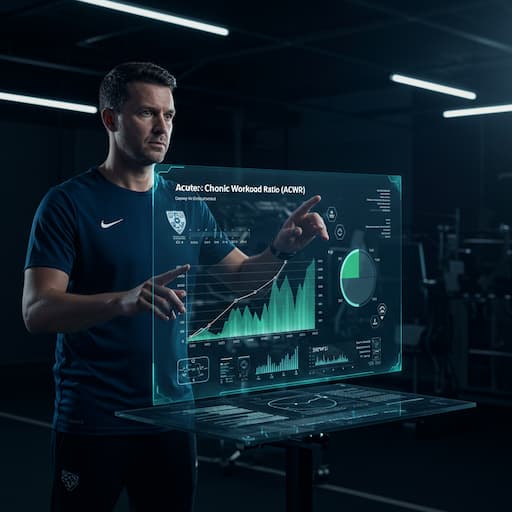
Imagine there are only two weeks left until the most important game of the season. Your star player, who seemed to be at peak fitness, suffers a hamstring strain during a routine training session and misses the rest of the season. This wasn’t just bad luck; it was the result of weeks of uncontrolled training load, acting like a ticking time bomb within his body. This nightmare scenario is the concern of every coach and sports manager. The good news is that in today’s world, there is a way to defuse this bomb. In this article, we’ll learn how to prevent such a disaster through the power of data science.
Why is training load management your most important hidden responsibility?
Balancing between pushing an athlete for progress (Overload) and preventing their breakdown (Overtraining) is an art. But in today’s modern, high-pressure sports environment, this art must evolve into an exact science. A large portion of non-contact injuries that cripple teams stem from poor training load management. When, as a coach, you lack a clear view of your players’ true levels of fatigue, every intense training session can move them closer to the edge of injury rather than strengthening them.
Two Sides of the Same Coin: External Load vs. Internal Load
To fully understand training stress, we must distinguish between two key concepts. These concepts are the two sides of an athlete’s performance coin, and grasping their differences is the starting point of a transformation in your coaching approach.
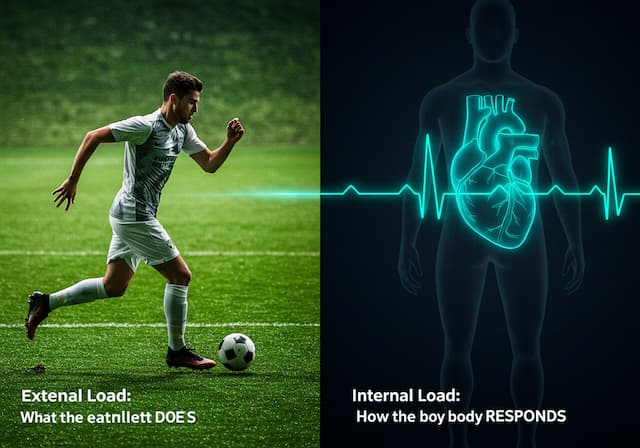
External Load: What the player does.
They describe *what* has been done. Using advanced technologies such as GPS and motion sensors (IMU) in the LiveVest system, we can accurately measure the following:
Total distance covered
Number of sprints and speed
Number of accelerations and sudden decelerations
Number of jumps and their height
This data is incredibly useful, but it tells only half of the story.
Internal Load: The body’s response to that activity.
This is where the magic happens, and where great coaches set themselves apart from good ones. Internal load reflects the physiological response and stress the body experiences. internal An athlete’s body responds to the external load applied. The very same training session can result in completely different internal loads for two players. A player who didn’t sleep well the night before or is under mental stress endures a much higher physiological strain to perform the same workload.
This is where LiveVest’s medical-grade ECG data becomes essential. By precisely analyzing heart rate and, more importantly, heart rate variability (HRV), we gain a window into the athlete’s nervous system and can understand how much stress their body is truly under.
Conclusion: From Art to Science, from Feeling to Precision
To make intelligent decisions in today’s sports, relying solely on coaching intuition is no longer enough. Attention must be given both to what the player does (external load) and, more importantly, to how the body responds to that work (internal load). The scientific ACWR model is a powerful tool for creating this balance, and the LiveVest system delivers it to you in a simple, automated, and precise way.
Are you ready to transform your team’s training load management from an art of intuition into an exact science? Talk to our experts and see in a live demo how LiveVest can help you protect your most valuable asset—your players.

